Two weeks each spring when an island closes its roads and lets motorcycles race between the walls
The Isle of Man TT: Thirty-Seven Miles of Closed Public Road
About the Isle of Man TT
The Isle of Man TT — the Tourist Trophy — has been run on the island in May and June for most years since 1907. It is sanctioned and organised by the Auto-Cycle Union, and the Manx government owns the rights to it and promotes it. It has been cancelled only for war or disease.
It is not a circuit race. The TT runs in a time-trial format on public roads closed for the purpose, which is the single fact that explains everything else about it. Riders are released at intervals against the clock rather than gridded, and they race between stone walls, kerbs, hedges and houses with no run-off of any kind. Nothing else at this level of motorsport is still done this way.
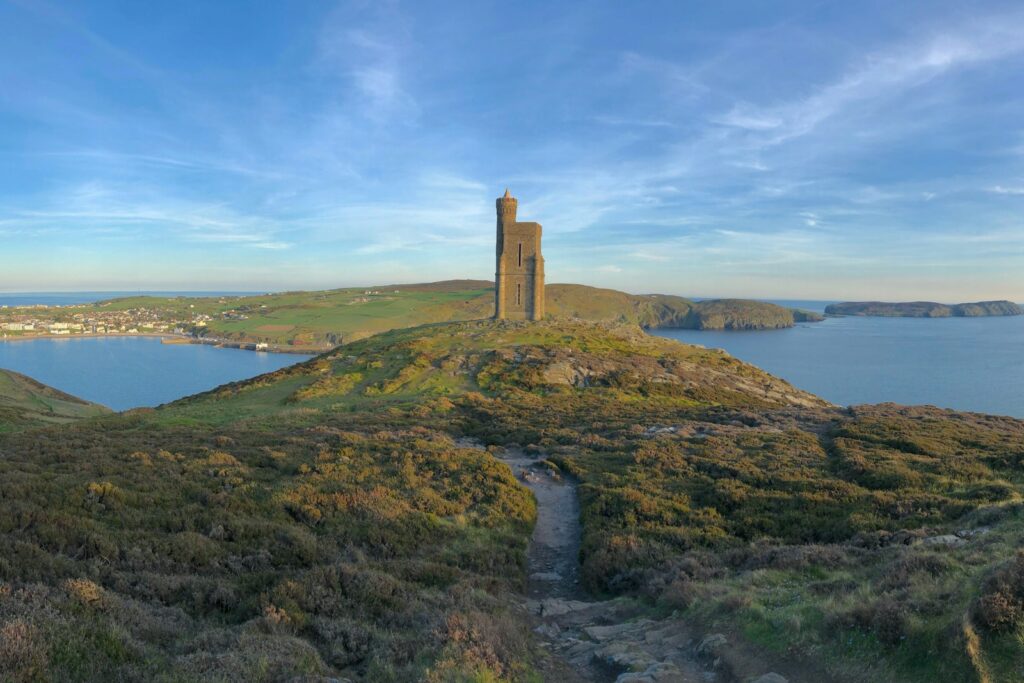
The Snaefell Mountain Course
The course is 37.75 miles long and contains 219 turns, running through villages and open moorland and climbing over the mountain. The first TT in 1907 was held on the shorter St John’s Short Course — a 15.85 mile triangle, ten laps, 158.5 miles in total — with two classes divided by cylinder count and by fuel economy, at ninety miles per gallon for a single and seventy-five for a twin. The machines had to be touring motorcycles, complete with saddles, pedals, mudguards, silencers and a toolkit.
Speeds outgrew that course quickly and in 1911 the race moved to the Snaefell Mountain Course, then 37.40 miles, with the Senior and Junior classes run separately for the first time. Oliver Godfrey won that first Senior race at an average of 47.63 mph. In 1920 the course was altered to its present 37.75 mile form, with the start moved to the top of Bray Hill, and that year produced the first riders to average over fifty miles an hour. The sidecar class arrived in 1923, won by Freddie Dixon and Walter Perry at 53.15 mph.
The Fortnight, and How It Is Structured
The event is two weeks, not a weekend, and understanding the split is the whole of the planning. The first week is practice and qualifying, when the roads close in the evenings and the riders learn or relearn a course too long to memorise in one go. The second week is race week: five classes, each competing in two races.
Practice week is the local secret. The island is quieter, the roadside positions are open, and the sessions run in the long northern evenings, which is when the course looks the way the photographs do. Race week is the event, and it is also when the island is at capacity. Anyone going for the first time should be there for both, and anyone going for a single week should think carefully about which.
Where to Start
- Book the island a year out — accommodation and crossings are the constraint, not the racing
- Come for practice week as well — the evening sessions are quieter, the positions are open and the light is better
- Choose your vantage points in advance — the roads close hours before, and once they do you are where you are
- Fly in rather than queue for the boat — Ronaldsway is small, and it is the difference between arriving and enduring
Arrange It With Perfect.Live
Tell us which fortnight you are coming for and we will secure the island before it fills
The Island Is the Thing to Arrange
More than 40,000 visitors travel to the Isle of Man for the TT each year, onto an island with a fixed number of beds, one airport and a ferry service. That is the entire logistical story and it is why the TT defeats people who plan it late. Houses and hotels are committed a year ahead. The ferry crossings for race week are spoken for months in advance, and every one of them is carrying motorcycles.
The other half is the course itself. Thirty-seven miles means the classic vantage points — Bray Hill at the bottom of the start, the mountain section, the fast stretches out towards the north — are each a separate decision, and once the roads close nobody moves between them. Choosing two or three positions across a fortnight and getting to each one before the closure is the difference between watching the TT and sitting in one field.
How We Help
- A house or hotel on the island, committed a year ahead rather than hoped for
- Private aviation into Ronaldsway, and a yacht in Douglas Bay where the beds on land have run out
- Grandstand seating at the start and finish, and paddock access where it exists
- Roadside positions chosen and reached before the closures, with transport that accounts for them
- Tables across a fortnight on an island that is entirely booked, via our Fine Dining & Nightlife service — ask your Business Concierge
A word about the nature of the event, because it would be dishonest to write about the TT without it. This is racing on roads with walls on both sides, and it has killed riders since Victor Surridge died in practice in 1911, the year the race moved to the mountain course. Everyone who competes knows exactly what they have entered. Spectating is a different matter and is managed carefully by the organisers, but the character of the fortnight is not a sporting spectacle with a risk attached — the risk is inseparable from why it still exists in this form.
The Isle of Man is also a genuinely good place to spend a fortnight, with coast, moorland and a steam railway, and the TT is the one time of year when getting there requires planning. For anyone building a wider motorsport year around it, the closest thing in spirit is the Le Mans Classic — another event where the course and its history matter more than the result.
Frequently Asked Questions
In May and June each year, over two weeks — one of practice and qualifying, one of racing.
The Snaefell Mountain Course is 37.75 miles long and contains 219 turns, all of it public road closed for the event.
The first TT was held in 1907, on the shorter St John’s Short Course. The race moved to the mountain course in 1911.
No. It is a time trial. Riders are released at intervals against the clock rather than starting together on a grid.
More than 40,000 visitors travel to the island each year for it, which is why accommodation and crossings are the real constraint.
Race week is the event; practice week is quieter, with evening sessions and open roadside positions. Ideally both.
Yes, and it always has been. The first fatality was in 1911. It is raced between stone walls with no run-off, and that is the defining fact of the event.
A year. Houses, hotels and ferry crossings for race week are all committed well before the season.
Ready When You Are
An island that closes its roads for a fortnight, arranged properly for once