
How Do CEOs Manage Their Time? Delegation Beyond the Office
Most CEO time goes to meetings. The hours that slip away outside the office can be handed to one team
Read MoreeastNo official body awards seven stars — but the hotels that carry the label do offer something different, and it is worth knowing exactly what
Dubai 7 star hotels are one of the city’s most repeated phrases and one of its least precise. No tourism authority or hotel-rating organisation awards more than five stars, so “seven-star” is a description and not a classification.
The label began with one building. The Burj Al Arab was described as seven-star by a British journalist on a press visit before it opened, and the operator, Jumeirah, has said it does not encourage the term and has never used it in its advertising. Since then, other hotels have been given or have adopted the label.
No rating organisation recognises a category above five-star deluxe; higher claims are used for advertising, as the history of hotel ratings shows. Dubai’s own system is no exception: its tourism authority classifies hotels from one to five stars, and the very top of the market is marked by categories within the five-star band, such as platinum and gold, rather than by a higher star count.
The label therefore tells you about reputation and intent, not about a measured standard. It is better read as a signal that a hotel is trying to offer more than a conventional five-star stay.
The Burj Al Arab, which opened on 1 December 1999, is the reference point. It stands on an artificial island about 280 metres offshore, connected to the mainland by a private bridge. It is an all-suite hotel, arranged as duplexes, with butler service, a dedicated team for each suite, a helipad, and a restaurant with a large seawater aquarium.
One point matters for planning. In April 2026 Jumeirah announced a phased restoration of about 18 months, and the hotel has closed to guests, with reopening expected in late 2027. Guests with plans in the meantime are being assisted with a reservation at one of the other Jumeirah properties.
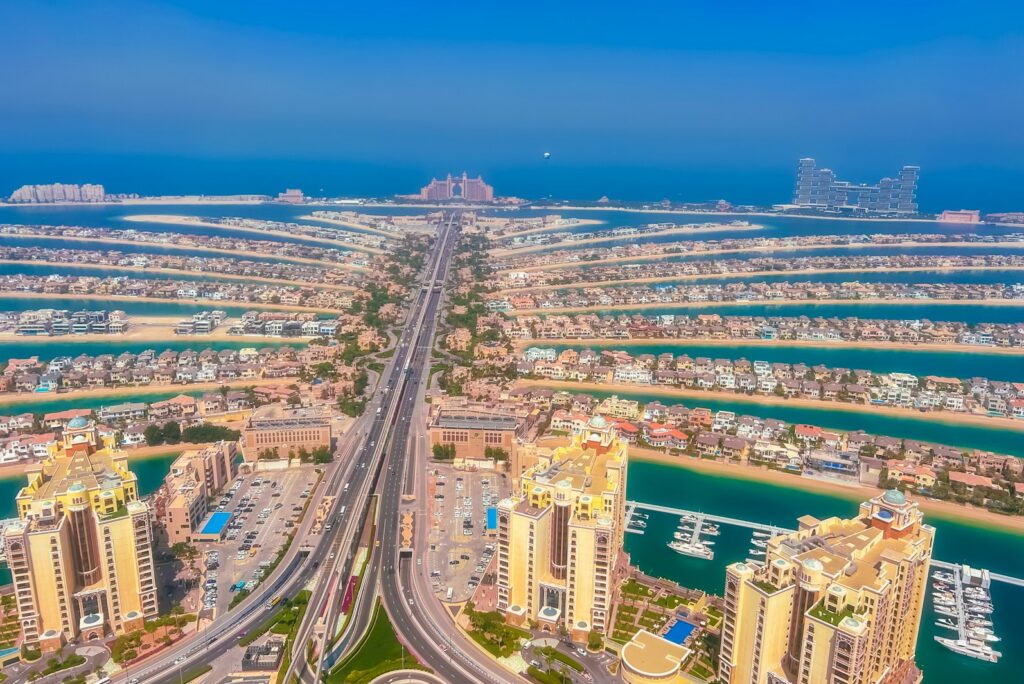
The other name most often placed in this conversation is Atlantis The Royal, which opened on the Palm Jumeirah in February 2023 and offers suites with private pools.
What these hotels share is not height or ornament. It is ratio and privacy: more staff per guest, larger suites, and a controlled arrival.
Because stars do not discriminate at the top, the useful questions are different.
Neither height nor fame is a reliable guide. A smaller property on a private island or a quiet part of the coast can serve you better than a landmark.
Dubai hotel packages bundle a room with other elements: transfers, dining, spa time, experiences, and sometimes a boat or a car. The advantage is convenience. The risk is that a standard package is built for the average guest and includes things you do not want.
A better approach is to treat a package as a starting point. Keep what fits, such as an airport transfer, and replace what does not, for example by swapping a generic dinner for a table chosen for you. We build packages around the guest, not around the property’s template, which is what separates a package from a plan.
Tell us the evening you have in mind, and we will secure the table
We shortlist Dubai hotels against what you want from the stay, not against the label. We arrange the room or suite, the arrival, the transfers, and the dining around it, and we can build a package from components instead of taking one off the shelf. For the city beyond the hotel, see our Dubai luxury concierge guide and our fine dining and nightlife arrangements.
No. No tourism authority or rating organisation awards more than five stars, and Jumeirah itself has said it does not encourage the term for the Burj Al Arab
The Burj Al Arab is the one most associated with the label. Others, including Atlantis The Royal, are sometimes described in similar terms, though none is officially rated above five stars
Officially, nothing, because seven-star is not a classification. In practice, the label points to hotels with larger suites, higher staff ratios, and a more private arrival
Bundled stays that combine a room with transfers, dining, spa, or experiences. The best are adjusted to the guest instead of taken off the shelf
The Burj Al Arab is closed for restoration, with reopening expected in late 2027. In the meantime we arrange stays and the experiences around them at other luxury hotels in Dubai, subject to availability, and we explain plainly what each option includes