
Cost of Luxury Concierge: How It Is Priced, and Whether It Is Worth It
The cost of luxury concierge membership explained: pricing models, service fees, what drives cost, and whether luxury concierge services are worth it.
Read MoreeastThe oldest festival in cinema, on an island reached only by water
The Venice Film Festival is the world’s oldest film festival and one of the five that matter internationally — the three European festivals of Venice, Cannes and Berlin, alongside Toronto, and Sundance. It was founded by Giuseppe Volpi in Venice in August 1932, and it forms part of the Venice Biennale, one of the world’s oldest exhibitions of art, created by the Venice City Council on 19 April 1893.
The festival is held in late August and early September on the island of the Lido in the Venice Lagoon, and screenings take place in the historic Palazzo del Cinema on the Lungomare Marconi. FIAPF formally accredited the festival in 1951. Alberto Barbera has been its artistic director since 2011, and the eighty-third edition ran from 2 to 12 September 2026.
The principal award is the Golden Lion, with the Silver Lion and the Volpi Cup for acting beneath it. The prizes carry weight far beyond Italy: because the festival falls at the start of the awards season and takes a growing number of American productions alongside the international competition titles, Venice has become a launchpad for films heading towards the Academy Awards.
Its history is not tidy and the festival does not pretend otherwise. The Palazzo del Cinema was designed and completed in 1937 as the festival’s permanent home, and it has hosted every edition since, except the wartime years. The 1940 to 1942 festivals are regarded as if they did not happen, because they were held away from the Lido. The Golden Lion was later suspended altogether and did not return until 1980. In 2018 a film produced by a streaming service took the Golden Lion, the first time such a film had won the top prize at a major festival.
The Lido is a long, thin barrier island with one main promenade, and during the festival almost everything happens within walking distance of the Palazzo del Cinema. That compactness is the pleasure of Venice compared with the sprawl of other festivals: the screenings, the press, the hotels, and the terraces are all in the same few hundred metres of seafront.
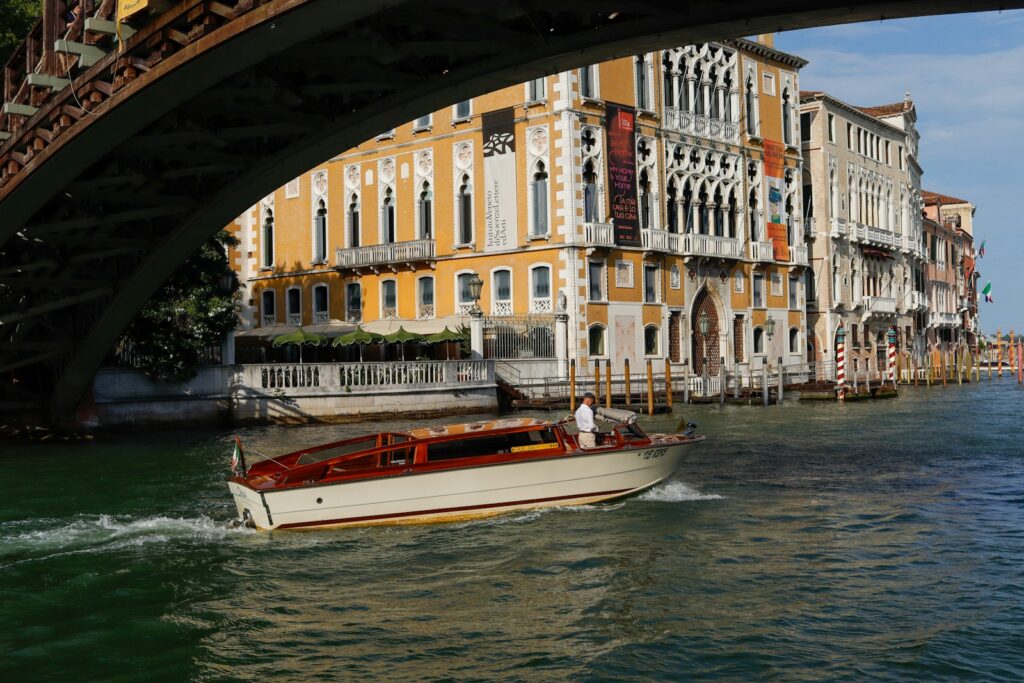
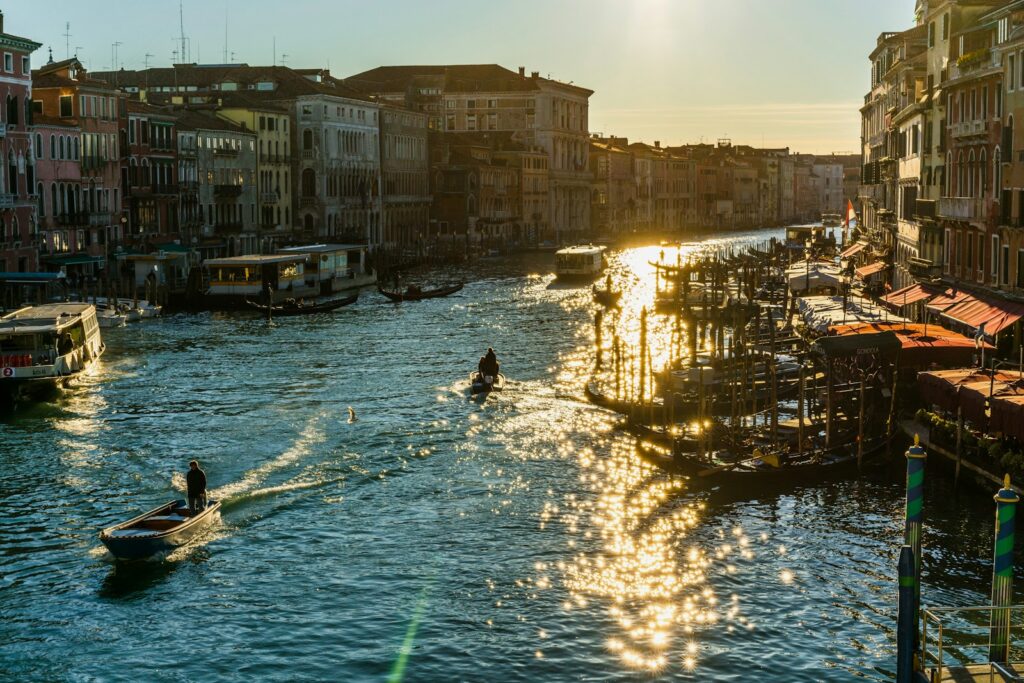
The city across the water provides the other half. Venice holds events, interviews, and parties through the night during the festival, venues stay open late, and the receptions are held in palaces and gardens rather than hotel ballrooms. The practical consequence is that the interesting part of most days happens after midnight and on the other side of the lagoon, which makes private water transport less of a luxury than a schedule requirement.
Tell us which days of the festival you want and we will arrange the Lido and the water around them
Clients who follow the festival circuit rarely take only one. Venice runs a week before Toronto, and the pairing is the standard autumn arrangement for anyone tracking the awards season; Berlinale opens the following February. Studio and brand hosting during the festival runs through our Business Concierge team.
The opening and closing nights are the ones that appear in photographs, and they are also the two days when the island is least pleasant to be on. The middle of the festival is where the actual cinema is: competition screenings with the directors present, half-empty morning shows of films that will be talked about for a year, and enough space on the promenade to have a conversation.
If the red carpet is the point, take the first and last weekends and accept the crowds. If the films are the point, take the Tuesday to Friday in the middle, and plan two screenings a day rather than four. The temptation to over-schedule is strong and Venice punishes it, because every transfer involves a boat and the boat does not care about your next screening.
In late August and early September. The 2026 edition ran from 2 to 12 September
On the Lido in the Venice Lagoon, with screenings at the Palazzo del Cinema on the Lungomare Marconi
It was founded in August 1932 and is the oldest film festival in the world
The Golden Lion, with the Silver Lion and the Volpi Cup for acting beneath it
Yes. The festival is one branch of the Venice Biennale, which the city council created in 1893
Six to nine months for accommodation on the Lido. Screenings can be arranged closer to the dates
La Biennale confirms Venice Film Festival dates each spring, typically the same ten days spanning late August into early September
The Lido’s relative separation from central Venice keeps the festival contained to a single strip of cinemas, hotels and red carpets
An international jury of filmmakers and critics, chaired by a different president every edition, decides the winner on the festival’s final night
Some public screenings are, though the red-carpet premieres and industry accreditation badges are allocated separately and sell out fastest
Mostra del Cinema is simply Italian for film exhibition, the name Italians and the festival’s own branding still use