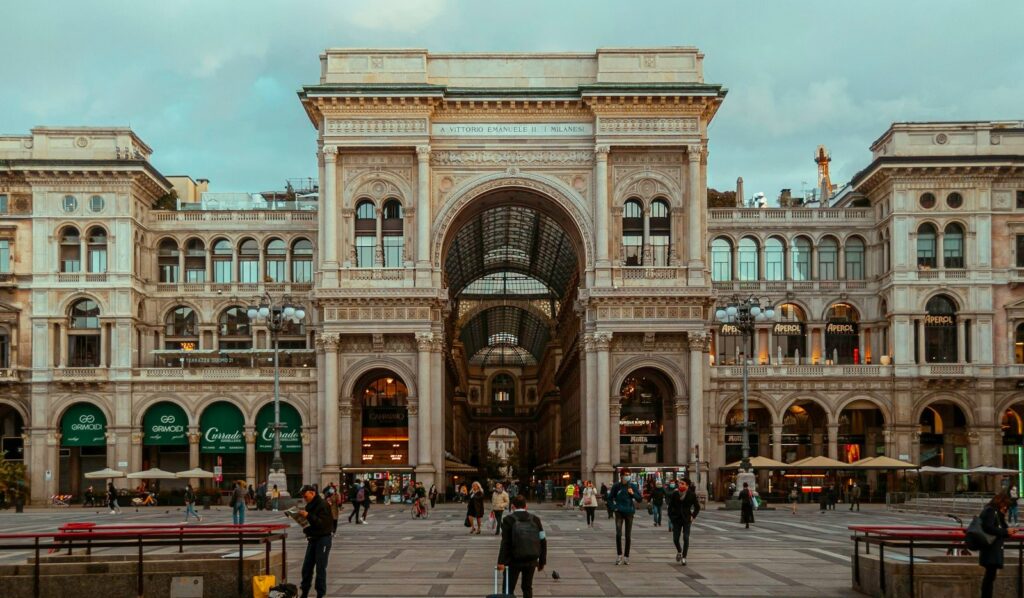
A UHNWI sits in the narrowest tier of global wealth, and that scale calls for a different kind of support than the broader high-net-worth bracket below it
What Is an Ultra-High-Net-Worth Individual?
The $30 Million Threshold
The term ultra-high-net-worth individual, usually shortened to UHNWI, refers to a person with investable assets of $30 million or more, excluding their primary residence. It is the narrowest tier of wealth classification, sitting above the broader high-net-worth individual (HNWI) category, which typically starts at $1 million in investable assets.
There is no single global authority that sets this threshold — figures vary slightly between wealth reports from Knight Frank, Capgemini, and UBS — but $30 million is the benchmark most consistently used across the private banking and wealth management industry.
How a UHNWI Differs from a High-Net-Worth Individual
The distinction is not just a matter of degree. A high-net-worth individual may hold a diversified portfolio of investments and property, but their finances are typically manageable through a single financial adviser or private bank relationship.
A UHNWI’s wealth is structurally different. It is often distributed across multiple jurisdictions, asset classes, and generations, and frequently includes illiquid holdings — private equity, real estate portfolios, business ownership, art and collectibles — that require specialist oversight rather than a single point of advice.

How Many Ultra-High-Net-Worth Individuals Are There?
The global UHNWI population passed 713,000 for the first time in 2026, according to the Knight Frank Wealth Report — with 89 new UHNWIs created somewhere in the world every single day.
The distribution is uneven. North America holds the largest share at 37% of the global total (roughly 244,700 individuals), followed by Asia-Pacific at 31% (219,310) and Europe at just over 25% (138,700). Growth is fastest outside the traditional centres of wealth: India’s UHNWI population surged by 63% between 2021 and 2026, while the Middle East’s share of global UHNWI wealth rose from 2.4% to 3.1% over the same period.
What Changes at $30 Million
The threshold is a number, but what it marks is a change in how a life has to be administered. Four things tend to shift at once.
Coordination replaces access as the bottleneck. Below this tier, the difficulty is usually getting to the right people. Above it, the right people are already available — the difficulty is that there are now a dozen of them, in several countries, and nobody holds the whole picture.
Every decision acquires a second layer. A property purchase is no longer a property purchase; it carries tax residency, structuring and succession consequences that have to be resolved before the first one can be.
The household becomes an organisation. Staff, advisers, and service providers multiply to the point where managing them is itself a job. Families who do not formalise this usually find one person — often a spouse or a long-serving assistant — quietly absorbing it.
Privacy stops being a preference. At this level it becomes a working requirement that shapes how travel is booked, how bills are paid, and who is told what.
None of these is solved by adding another adviser. They are solved by deciding, deliberately, which structure holds the overview.
The Lifestyle and Needs of a UHNWI
Wealth at this level changes the nature of everyday decisions. Travel is rarely a single booking; it is a sequence of private aviation, multi-property logistics, and security considerations across several countries in the same month. Time itself becomes the scarcest resource, and delegation — of the right kind — becomes essential rather than a convenience.
This is where dedicated structures replace ad hoc solutions. Many UHNWIs consolidate their financial, legal and lifestyle management under a Family Office, while day-to-day logistics — travel, events, dining, personal requests — are handled through a dedicated Business Concierge relationship. The two are complementary: one manages wealth and legacy, the other manages time and experience.
Book It With Perfect.Live
Most families at this tier already have advisers. What they rarely have is one point of contact holding the overview. Tell us what currently takes up your week and we will show you what we would take off it
Common Misconceptions
Not every UHNWI holds highly liquid wealth — a significant share is tied up in private businesses, real estate, and collectibles that cannot be quickly converted to cash. And UHNWI status is not necessarily permanent: market cycles, business outcomes and generational transfers move individuals in and out of the tier more often than the static headline figures suggest.
Why This Distinction Matters
Understanding where you sit on this spectrum shapes the kind of support worth investing in. A single concierge call can solve a dinner reservation; it cannot coordinate a family’s succession planning, multi-jurisdictional tax exposure or a permanent household staff. Recognising the difference is the first step toward building the right team — not more people, but the right structure. If you are already at the point of comparing providers, our checklist for choosing a luxury concierge covers what to ask before committing.
Frequently Asked Questions
An HNWI (high-net-worth individual) typically holds $1 million or more in investable assets; a UHNWI holds $30 million or more. The UHNWI tier represents a much smaller, more concentrated segment of global wealth.
North America holds the largest share of the global UHNWI population, followed by Asia-Pacific and Europe, according to the Knight Frank Wealth Report. Growth is fastest in markets like India and the Middle East.
No. Many rely on a combination of private banking, independent advisers and a concierge relationship rather than a fully built family office, particularly below the $100 million threshold where a dedicated single-family office typically becomes cost-effective.
Net worth, not income. The classification looks at total investable assets — cash, securities and other liquid or near-liquid holdings — rather than annual earnings, which is why a high earner is not automatically a UHNWI, and a UHNWI is not necessarily drawing a large annual income.
Ready When You Are
Whatever the label, the practical question is who holds the overview. Become a Member and let us hold it