Restaurants Worth Flying For: Unique Dining Experiences in Five Cities
Six starred tables in five cities, and how to plan the flight around the reservation
Read MoreeastA home worth designing is rarely one project — it is a brief, a team, a timeline, and a hundred decisions made in the right order
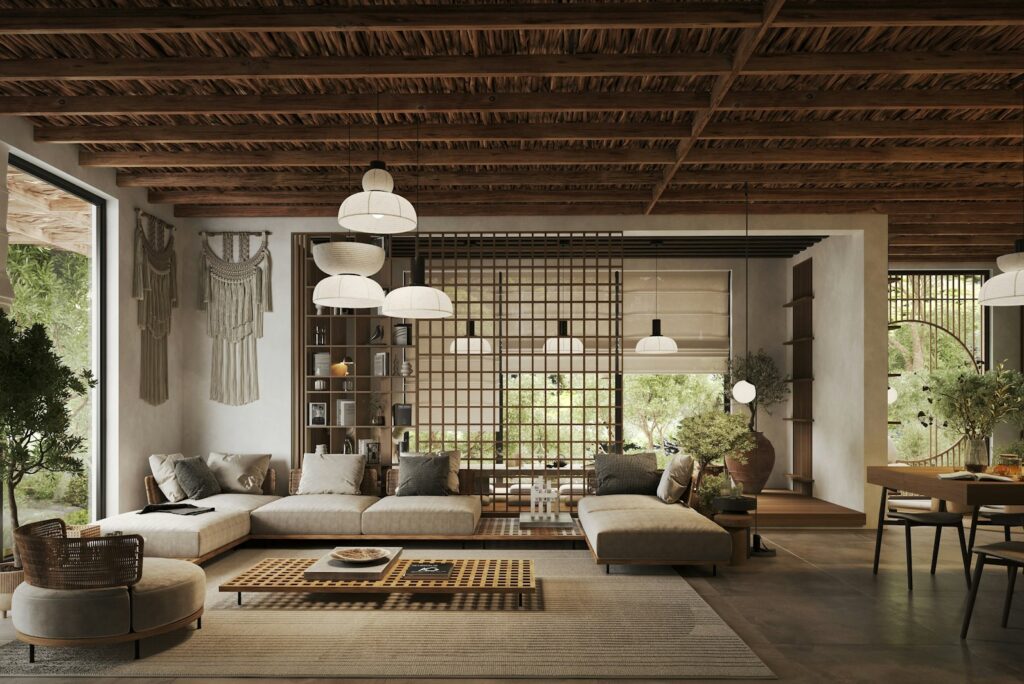
Luxury interior design is the planning and furnishing of a residence, yacht, aircraft, or hotel suite at the level where every material is chosen, often made to order, and installed by specialists. It is slower than conventional design, and its quality depends less on the budget than on the order of the decisions.
For the families we work with, the interior is also a logistical question: several homes, several countries, and a calendar that does not pause for a fit-out. This page sets out how we see the process. For the wider context of the clients involved, see what an ultra-high-net-worth individual is and our 2026 UHNWI trends.
The first distinction is between the two professions. An interior designer plans space, lighting, acoustics, building-code compliance, and the coordination of mechanical and electrical systems, while a decorator furnishes and adorns. As the distinction is often put, designers may decorate, but decorators do not design.
For a new build or a full renovation, the brief belongs with a designer or an architect-led practice. For a refresh of an existing space, a decorator may be exactly right. Luxury home interiors often need both, in sequence.

Luxury interior designers differ more in method than in style, and the right choice depends on the project.
Architect-led practices. Firms such as that of the American architect Peter Marino, who works across flagship stores, residences, and hotels, treat the interior as part of the architecture. This suits a new build or a structural change.
Decorating studios. These specialise in furnishing, texture, colour, and art placement within an existing structure. They suit a home that already has good bones.
Specialist makers and ateliers. For one room, one piece of furniture or one piece of joinery, a direct commission can be more precise than a full-service studio.
Ask to see completed projects of the same scale and type, speak to past clients, and ask how the practice handles delays. Pay attention to how they talk about the client: a good designer asks a great many questions before showing anything.
High end interior design is rarely lost on taste. It is lost on timing and coordination: a stone slab that arrives late, a made-to-order sofa delayed by a month, a light fitting that cannot be installed until the ceiling is finished.
Three disciplines make the difference.
Privacy also shapes the process. Many clients prefer that suppliers, installers, and staff sign confidentiality terms and that the project is not photographed or published.
The best pieces rarely sit in a showroom. They come from workshops with long waiting lists, auction houses, dealers, and design fairs. The largest of them, Salone del Mobile in Milan, has run since 1961 and is typically held in April, with a programme of events across the city during the same week.
A concierge’s value here is access. We arrange introductions to makers and dealers, private previews where they exist, appointments in Milan during the fair, and the travel around them.
Tell us the evening you have in mind, and we will secure the table
We do not design homes. We do the work around the design: introductions to studios and makers that fit the brief, access to fairs, dealers, and private previews, and the logistics of getting pieces to the right country in the right order. Through our luxury goods sourcing and our personal shopping service we locate specific pieces, and our business concierge team supports family offices running several properties at once.
It is the planning and furnishing of a residence or other space at the highest level of materials and craft, usually with made-to-order pieces and specialist trades. The process is slow and sequenced by design
Start with the project type: an architect-led practice for structural change, a decorating studio for an existing space, a maker for a single piece. Review completed work of the same scale and speak to past clients
A designer plans space, lighting, systems, and compliance, while a decorator furnishes and adorns. Many luxury home interiors use both
It depends on scale, but made-to-order pieces and specialist trades mean the process is measured in many months or years, not weeks. A schedule built backwards from the move-in date keeps it on track
Yes. We arrange introductions, private previews and travel for fairs such as Salone del Mobile, and we help coordinate delivery. We do not design the interior ourselves