Luxury Corporate Gifts: Getting Year-End Client Gifting Right
A client gift that respects their policy, arrives before the office closes, and still feels chosen for one person
Read MoreeastTen bareback riders, three laps of a medieval square, and seventeen neighbourhoods that have been arguing about it since the seventeenth century
The Palio is a horse race run twice each summer — on 2 July and 16 August — in the Piazza del Campo in Siena. Ten horses and riders, bareback and in the colours of their districts, race three laps of the square over a thick layer of earth laid across the paving. It usually lasts under ninety seconds.
The riders represent ten of the city’s seventeen contrade — the wards into which Siena has been divided since the Middle Ages. Because only ten can run, the selection itself is part of the politics, and a contrada that has not won for decades carries that fact publicly. The race in its present form on the piazza dates from 1633.
The single most important thing to understand is that the horse wins the Palio, not the jockey. A rider thrown at one of the piazza’s two treacherous corners — San Martino, where the track drops and turns hard, or the Casato — does not end his contrada’s race. A riderless horse that completes three laps first is the winner, and it happens.
That rule explains the tactics. Jockeys are hired hands rather than local heroes, alliances between contrade are negotiated beforehand, and much of the race is about interfering with rivals rather than going quickly. To an outsider it looks like chaos. To Siena it is a legible contest with a century of grievances inside it.
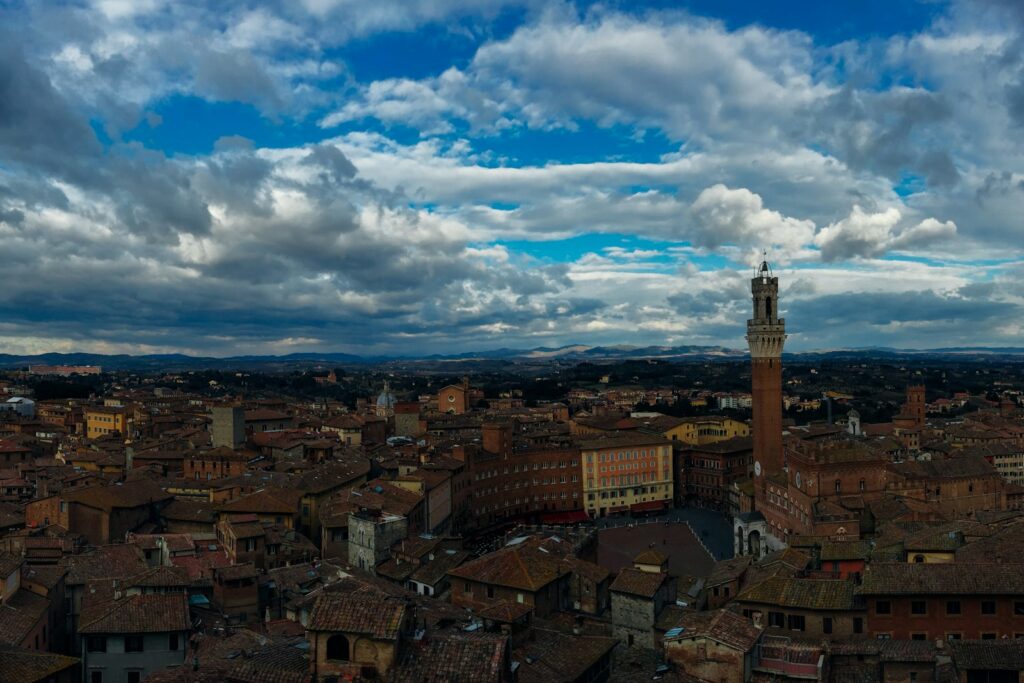
The Palio is free to watch from the centre of the piazza, where tens of thousands of people stand for hours in July heat with no shade, no seating, and no way out once the square is closed. That is where the Sienese are, and it is not a spectator experience in any comfortable sense.
The alternative is a window or a balcony on the square, owned by the families and institutions whose buildings enclose it. These are not sold on a ticketing platform. They are arranged privately, well in advance, and they are the only way to watch the race in comfort and actually see it.
The race itself is the end of four days of trial heats, contrada dinners in the streets, the blessing of the horse inside each district’s church, and a historical procession that takes two hours to cross the piazza before the start. For anyone who comes only for the ninety seconds, most of the event has already happened.
The contrada dinners are the part outsiders rarely see and the part worth arranging. They are held outdoors on long tables in the district’s own streets on the eve of the race, they are not public, and an introduction is the only way in.
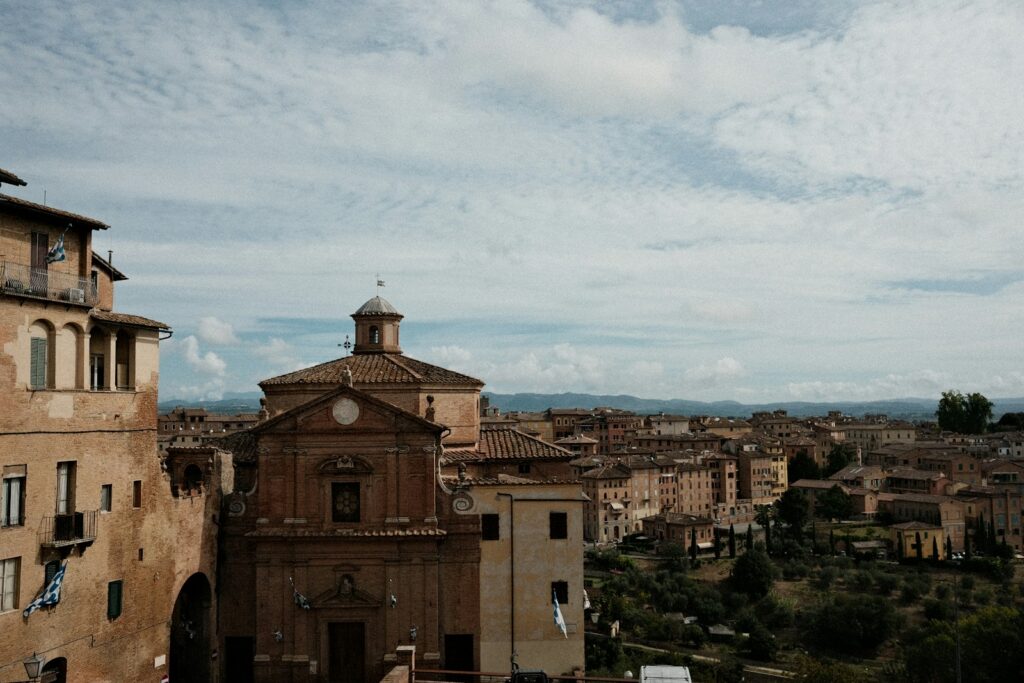
Tell us which Palio you want and we will find the window above the square
One thing worth saying about the atmosphere, because it is what visitors misjudge. The Palio is not a festival that Siena puts on for guests. It is the city’s own argument with itself, conducted in public, and outsiders are tolerated rather than courted. Grown men cry in the street afterwards, on both sides of the result. Behaving as a spectator at someone else’s event rather than a customer at an attraction is the whole etiquette.
It is worth pairing with the rest of Tuscany rather than treated as a day trip. The Mille Miglia passes through the same province in June, and the region is at its best either side of the August heat.
Twice each summer, on 2 July and 16 August, in the Piazza del Campo.
Three laps of the piazza, usually under ninety seconds.
Yes. The horse wins the Palio, not the jockey, and riderless winners are part of the race’s history.
Ten of Siena’s seventeen contrade run in each race, so which ten is itself part of the contest.
The centre of the piazza is free and extremely uncomfortable. The windows and balconies are private and arranged in advance rather than sold.
A year for a window and for accommodation in the city. Both dates fill completely.
The Palio di Siena 2027 races keep the traditional dates, run on 2 July and 16 August as always.
Ten horses and riders, one for each competing district drawn by lot, take part in the Palio di Siena horse race.
No official Palio di Siena tickets exist for the piazza itself; privately booked balcony seats typically start from several hundred euro per person.
Palio di Siena dates never change: 2 July for the Palio di Provenzano and 16 August for the Palio dell’Assunta.