Luxury Corporate Gifts: Getting Year-End Client Gifting Right
A client gift that respects their policy, arrives before the office closes, and still feels chosen for one person
Read MoreeastTwelve matches, two teams, and a scoring system that keeps Sunday alive
The Laver Cup is an international indoor hard-court team competition between Team Europe and Team World, the latter drawn from every continent except Europe. It has been held annually since 2017 and was conceived as tennis’s answer to the Ryder Cup. It normally falls two weeks after the US Open, and the host city rotates — alternating each year between Europe and the rest of the world, and usually choosing cities that do not already hold an ATP Tour event.
It is named for Rod Laver, who won all four majors in a single calendar year in 1962 and again in 1969, the latter remaining the only time a man has done so in the Open Era. The competition was created by Roger Federer’s management company TEAM8, the Brazilian businessman Jorge Paulo Lemann, and Tennis Australia, and in May 2019 it became an officially sanctioned ATP Tour event. It does not award ranking points, which is exactly why the tennis is played the way it is.
Six of the leading European players face six of their counterparts from the rest of the world, each side led by a captain who is a former champion. Three of the six qualify on ATP singles ranking as of the Monday after the French Open in June; the remaining three are captain’s picks, announced by the start of the US Open in August.
Twelve matches are played across three days — nine singles and three doubles. A win on day one is worth one point, on day two two points, and on day three three points, and the first team to thirteen takes the cup. The arithmetic means the winner can only ever be decided on the final day. Matches are played as two sets with a ten-point match tiebreak if they reach one set all, and if the teams finish level at twelve points each, a deciding set called The Decider is played with ad scoring and a tiebreak.
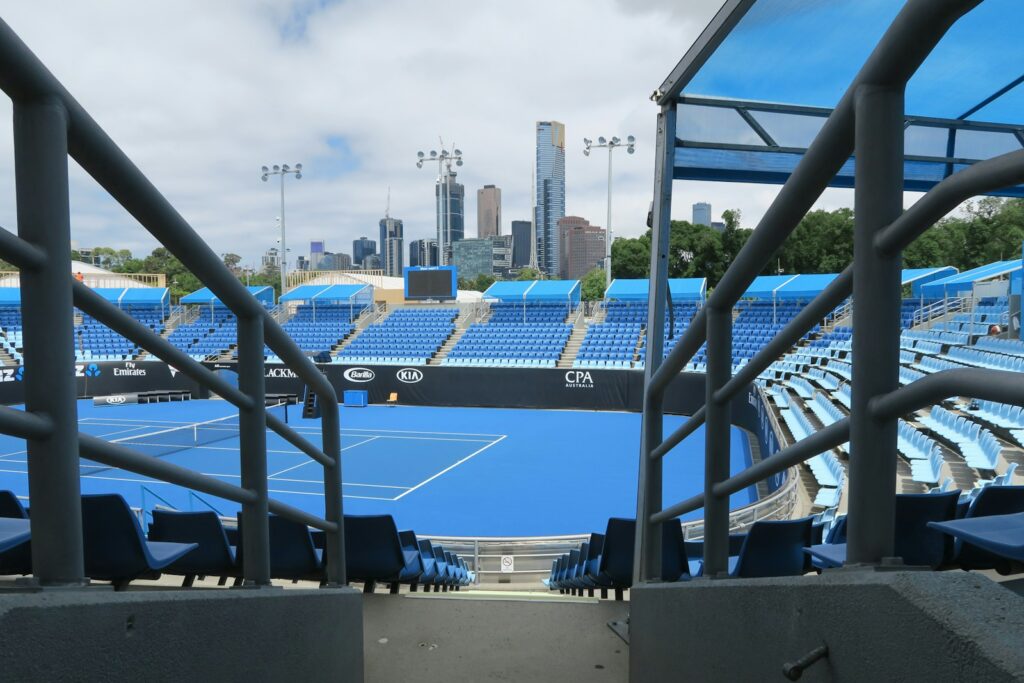
Two rules change the atmosphere entirely. Courtside coaching is not merely permitted but expected, and teammates and captains work the bench openly throughout every match — so a singles player is never alone on court in the way tour tennis demands. The other is the absence of ranking points, which removes the calculation from the season and leaves players free to treat the weekend as a competition rather than an accounting exercise.
The result is the most watchable tennis of the autumn. Players who would never partner each other on tour are put into doubles together, the crowd is closer to the court than at a major, and the black court and the single-court arena mean there is nothing else to look at. The 2026 edition, the ninth, was staged in London from 25 to 27 September at The O2 Arena.
Tell us which year and which city and we will hold three days of seats before the teams are named
Because the cup moves, the arrangement changes completely from year to year, and that is most of the work. Clients who follow the men’s season generally pair it with the ATP Finals in November, which closes the year. Corporate hosting and client programmes across the weekend run through our Business Concierge team.
The cup itself repays a close look. It was designed by the London agency Designwerk and hand-crafted by the goldsmiths Thomas Lyte, and every element refers to Laver’s career: the shape reflects his Rocket nickname, and the two hundred notches around the rim each stand for one of his career titles. Four rings at the base represent his two Grand Slam sweeps, and molten metal from one of his own trophies from the US Pro Championships was worked into the body.
It stands sixty-six centimetres high, weighs fourteen kilograms, and took more than four hundred hours to complete. Half-height miniatures were made for the winning players, first awarded in 2017.
In late September, normally two weeks after the US Open, across three days
The host city rotates each year, alternating between Europe and the rest of the world. The 2026 edition was in London
Wins are worth one point on day one, two on day two, and three on day three. Thirteen points takes the cup
Six players a side. Three qualify on ranking after the French Open and three are captain’s picks
No. It is a sanctioned ATP Tour event but awards no ranking points
Four to six months. Seats for the Sunday go first, because the result is always decided there
The organisers confirm Laver Cup dates each spring, always the three days roughly two weeks after the US Open final
Unlikely for several years, since the rotation means the event moves to a new European and a new world city each edition
The one-two-three point system across the three days was designed to keep the tie mathematically alive until the final match
Team Europe and Team World each have a captain who picks three of the six players, with the rest qualifying by ranking
The tournament releases its day-by-day Laver Cup schedule, including match order and session times, a few weeks before the event