
Cost of Luxury Concierge: How It Is Priced, and Whether It Is Worth It
The cost of luxury concierge membership explained: pricing models, service fees, what drives cost, and whether luxury concierge services are worth it.
Read MoreeastTwo and a half minutes of racing above a village with no cars in it
The Lauberhorn ski races — downhill, slalom, and combined — are among the highest-attended winter sports events in the world, drawing around 30,000 spectators each year. They are held in mid-January above Wengen in the Bernese Oberland, usually in the week before the Hahnenkamm at Kitzbühel, and they are among the oldest continuously held ski races anywhere.
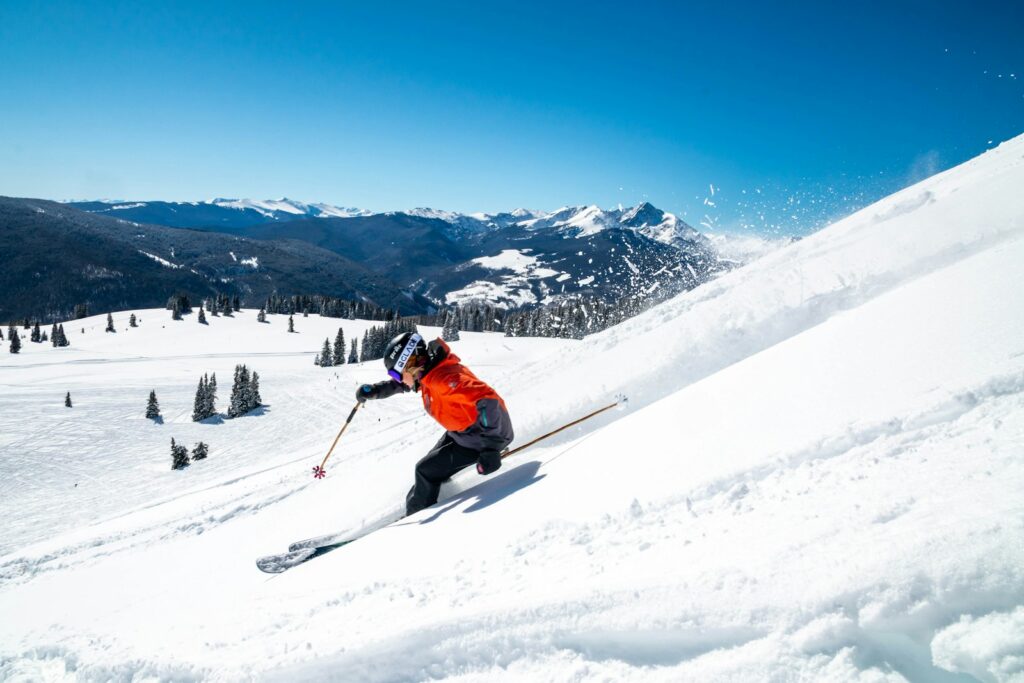
The Lauberhorn itself is a mountain in the Bernese Alps between Wengen and Grindelwald, north of the Kleine Scheidegg, and its summit stands at 2,472 metres. The downhill course is the longest in the World Cup: it starts at 2,315 metres and descends 1,028 metres to the finish at 1,287 metres in the village, taking around two and a half minutes to run — some thirty to forty-five seconds longer than a standard World Cup downhill.
Most of the named sections take their names from historic falls. The best known is the Hundschopf, a jump of roughly forty metres over a rock nose one-third of the way down, where the gradient reaches eighty-seven per cent. The Kernen-S passes over a bridge, and the Wasserstation tunnel takes the racers underneath the viaduct of the Wengernalpbahn — a railway line running through a live World Cup course, which is not a feature found elsewhere.
The speed comes at the Haneggschuss, a straight some twenty-five to thirty seconds from the finish where top speeds exceed 160 km/h. The highest speed ever measured in a World Cup race was recorded there in 2013, when Johan Clarey of France reached 161.9 km/h. The course record stands at 2:22.58, set by Marco Odermatt in 2025 at an average speed of 113.9 km/h across the whole descent. The largest crowd on record was 38,000, in 2012.
Tell us which January and we will arrange the village, the viewing, and the week in the Jungfrau
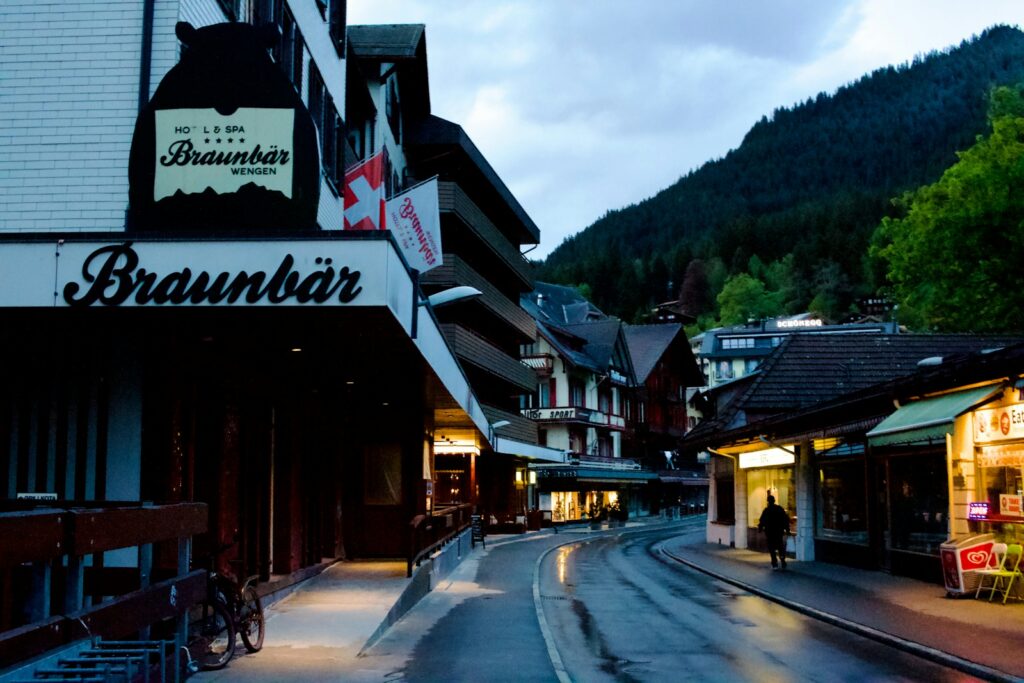
The village is one of very few car-free resorts in Europe. It sits above the Lauterbrunnen valley in the Jungfrau Region of the canton of Bern and has around 1,150 year-round residents, a population that rises to roughly 10,000 in winter. Access is by the Wengernalpbahn from Lauterbrunnen, a line that has run since the 1890s and is the most intensively operated section of the Jungfrau railways.
The setting is the other part of it. The downhill runs in full view of the Eiger, the Mönch, and the Jungfrau, which is why photographs of this race look unlike photographs of any other. An established fixture of the weekend is the display by the Patrouille Suisse, the aerobatic team of the Swiss Air Force, flying between those three faces.
The classic January pairing is two weekends in succession: the Lauberhorn at Wengen and then the Hahnenkamm at Kitzbühel. We arrange them as one trip, and our chalet portfolio covers both valleys. Corporate hosting across the race weekend runs through our Business Concierge team.
The scale is intimate in a way that a modern sporting event almost never is. Thirty thousand people in a car-free village produce a very particular atmosphere — everything is reached on foot, the trains run late into the night, and the finish area is in the village rather than at the end of a shuttle route.
The racing itself is unusually easy to follow. Because the course is long, a single run can be watched in sections over the course of an afternoon, and the gap between the fastest and the twentieth is large enough to see with the naked eye. The combined has been run as a super combined — a shortened downhill and a slalom run on the same day — since the format made its World Cup debut at Wengen in 2005.
The history sits lightly on it. Karl Molitor of Switzerland won six times between 1939 and 1947, the races having continued through the war years in neutral Switzerland, and the course has changed remarkably little since. It remains the race that downhill skiers most want on their record.
In mid-January, usually the week before the Hahnenkamm at Kitzbühel
Above Wengen in the Bernese Oberland, with the finish in the village itself
It is the longest on the World Cup circuit, descending 1,028 metres and taking around two and a half minutes
2:22.58, set by Marco Odermatt in 2025 at an average speed of 113.9 km/h
No. It is one of the few car-free resort villages in Europe. Access is by rail from Lauterbrunnen
A year for a chalet in the village. The weekend fills long before the season starts
The next Lauberhorn races are scheduled for mid-January, the week before the Hahnenkamm in Kitzbühel.
At 4.48 km, the Lauberhorn downhill is the longest course on the World Cup circuit, with a vertical drop of over 1,000 metres.
The Wengen ski World Cup weekend has run since 1930, making it one of alpine skiing’s oldest fixtures.
Skiers reach speeds of over 150 km/h before the Lauberhorn Hundschopf jump, one of the most photographed sections of the course.
The Wengen January races draw thousands of spectators who arrive by the historic cogwheel railway, since the village itself is car-free.
The longest downhill in the sport, run beneath the Eiger, into a village with no cars