Luxury Corporate Gifts: Getting Year-End Client Gifting Right
A client gift that respects their policy, arrives before the office closes, and still feels chosen for one person
Read MoreeastEvery other spring, cars from six decades of Grand Prix racing are driven round the harbour with nothing to protect them
The Monaco Historique Grand Prix — known officially as the Historic Grand Prix of Monaco — is a meeting of historic motorsport held on the full Circuit de Monaco — the same streets as the Formula One race, with the same barriers and the same absence of run-off. It takes place roughly two weeks before the modern Grand Prix.
The first edition was held in 1997, staged as part of the celebrations marking seven hundred years of Grimaldi rule over Monaco. It was intended as a single event. It was successful enough that from 2000 it became a fixture, and it now runs biennially — which means in any given year it either happens or it does not, and that is the first thing to establish before planning around it.
The meeting is divided into series by era, each with its own race: pre-war Grand Prix cars, front-engined Formula One from the 1950s, the rear-engined generation that followed, the 3-litre cars of the late 1960s and early 1970s, and the ground-effect machinery of the late 1970s and early 1980s. The categories are tightly period-policed and the cars are genuine rather than replicas.
The effect is a grid worth more than most national museums, being raced properly by owners and professional drivers on a circuit where a mistake is expensive in a way no modern track allows. This is the distinction that matters: the Monaco Historique is not a parade. Cars are on the limit, and they are damaged most years.
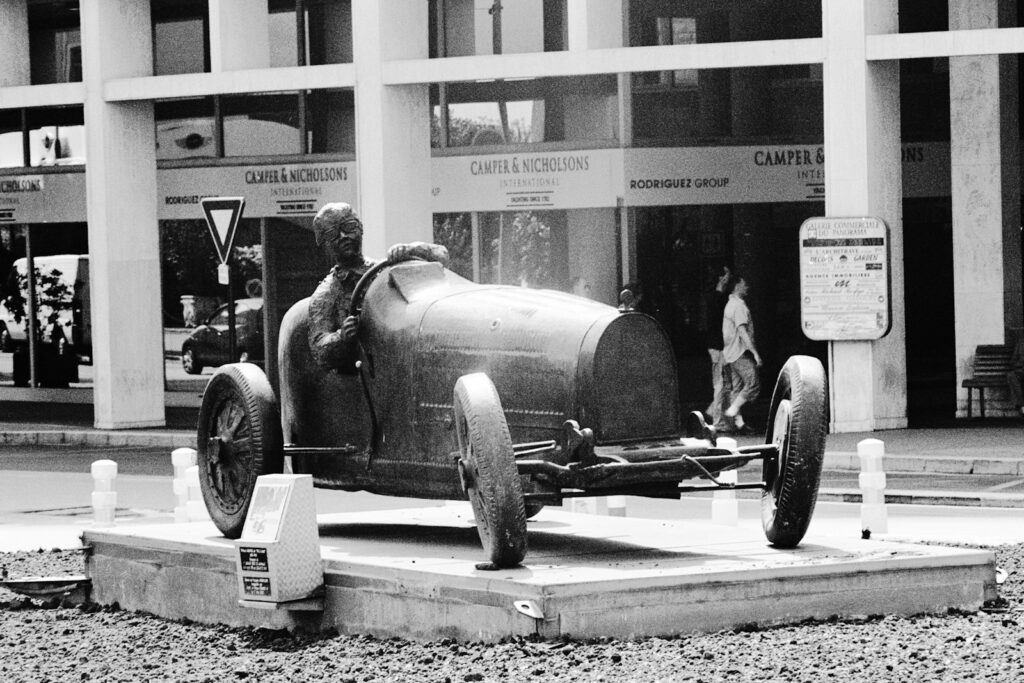
Monaco is the only Grand Prix circuit that has barely changed. The cars from the 1930s and 1950s are running the route they were designed for, past the same buildings, through the same tunnel, round the same hairpin at the Hotel de Paris. Nowhere else can that be said, because everywhere else the circuits were rebuilt or abandoned.
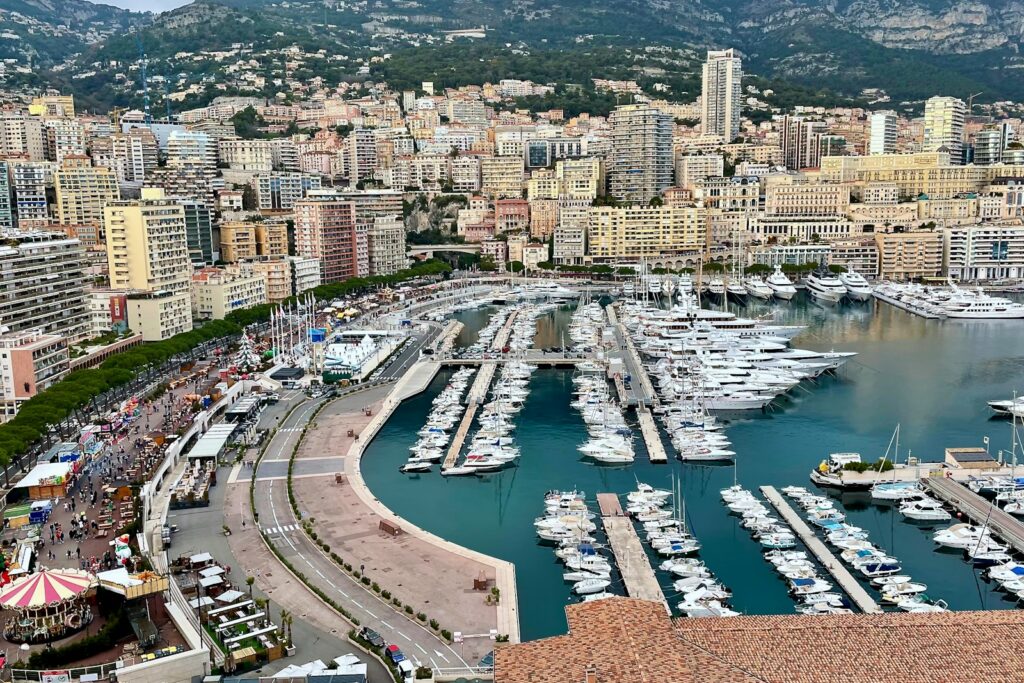
Practically, it also means the viewing is the same viewing as the Formula One weekend. The terraces, the harbour-front apartments, and the yachts moored in Port Hercule all look onto the track — and unlike Grand Prix weekend, they are obtainable. The Historique is the version of Monaco racing that can actually be arranged rather than queued for.
Tell us which spring you are on the coast and we will hold the harbour for the weekend
Practice runs on the Friday, qualifying and racing across the Saturday and Sunday, and the principality is otherwise functioning normally — which is the opposite of Grand Prix weekend, when Monaco stops being a place and becomes a venue. Restaurants take bookings, the Casino square is passable, and the Larvotto beaches are open.
The other advantage of April is the coast. Menton, Èze and Saint-Jean-Cap-Ferrat are twenty to forty minutes away, and are still weeks from the summer crowds, which makes the natural shape of the trip a few days on the Riviera with two of them at the circuit rather than a weekend locked inside Monaco.
The paddock is the detail that regular attendees mention first. Cars are prepared in the open, mechanics will talk, and owners are usually standing next to their own machinery — a level of access the modern sport stopped offering decades ago.
For anyone who knows Monaco only from the Grand Prix in early summer or the Yacht Show in September, the Historique is the third version of the place — the same streets and the same harbour, with a fraction of the people and rather better cars.
The Monaco Historique Grand Prix runs in the spring, roughly two weeks before the Formula One Grand Prix, and only every other year
No. It has run biennially since 2000, so half the calendar years have no meeting at all
Genuine period Grand Prix cars grouped by era, from pre-war machinery through to the ground-effect cars of the early 1980s
Yes, the full Circuit de Monaco, with the same barriers and the same lack of run-off
Considerably. Apartments, terraces and harbour berths that are impossible in May are obtainable for the Historique
Six months for a harbour-front position, and longer for a berth in Port Hercule
Grand Prix de Monaco Historique is the event’s full French title, used on official entry lists and programmes.
The Monaco Historic Grand Prix groups entries into several period grids, from 1950s front-engined cars through to 1970s and 1980s turbo-era machines.
The Monaco Historique 2028 meeting is expected in May, continuing the biennial cycle established in 2000.
Monaco Historique tickets are released via the Automobile Club de Monaco, with grandstand seats selling out months ahead.